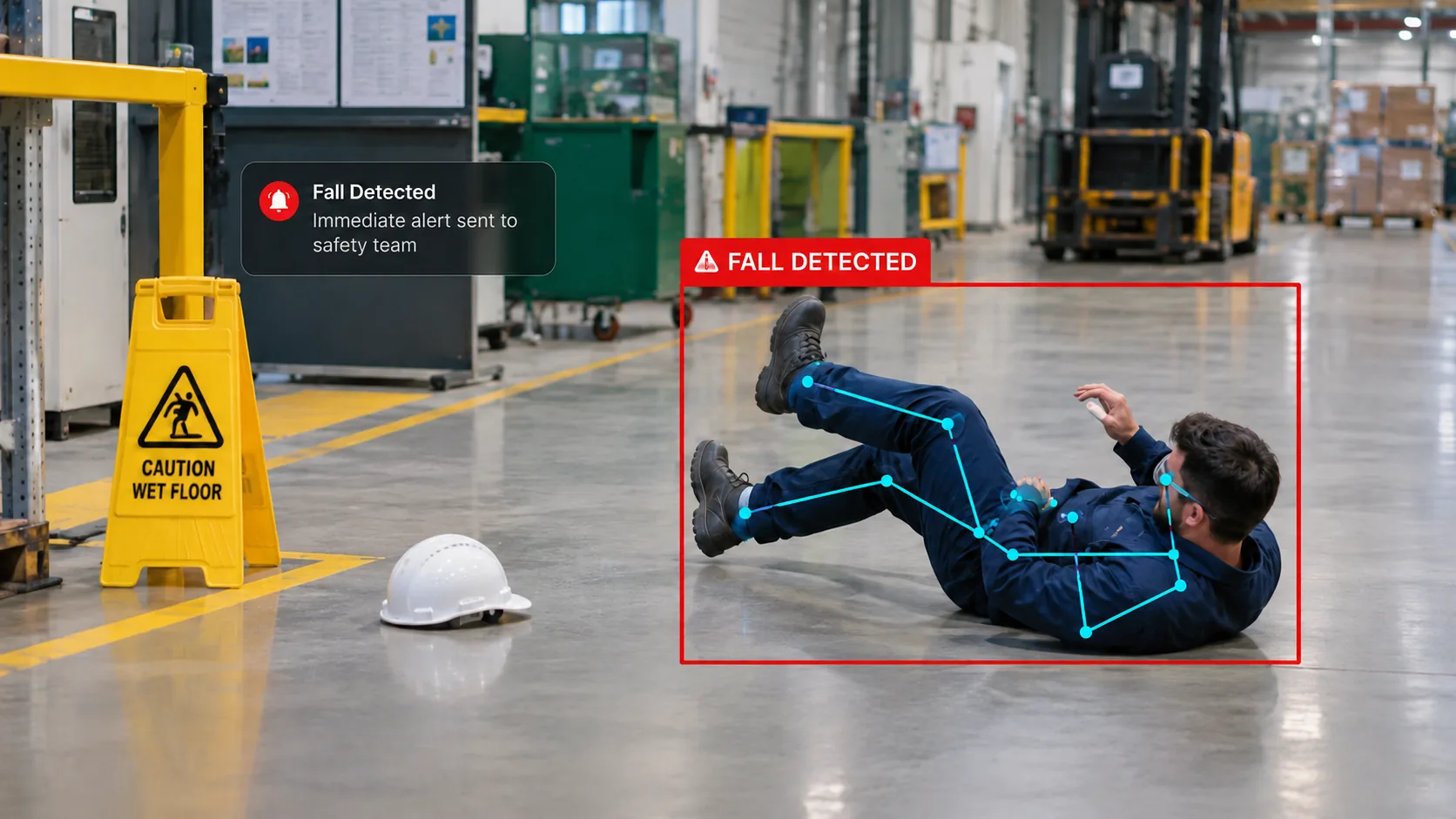
Detect Worker Falls and Trigger Emergency Alerts Faster.
YAFE AI Fall Detection uses computer vision to analyze CCTV video and identify potential worker falls in monitored areas. When a fall-like event is detected, the system can generate an alert so that responsible personnel can respond more quickly.
YAFE continuously tracks worker spatial vectors, vertical acceleration, and body orientation on the floor.
Detect and track personnel walking through remote warehouse aisles, chemical storage bays, and isolated tanks.
Calculates downward velocity and sudden orientation shifts from upright stance to horizontal ground contact.
Distinguishes deliberate kneeling, bending, or sitting from genuine accidental worker falls to eliminate false alarms.
Sends immediate WhatsApp, SMS, buzzer triggers, and automated telemetry alerts to plant emergency responders.
In large manufacturing complexes, workers frequently perform tasks alone in remote boiler rooms, electrical substations, or quiet warehouse corners. Without automated AI vision, an injured worker may lie helpless for hours before discovery.
An intelligent AI vision pipeline analyzing video frames on-premise without cloud latency.
Live RTSP streams from factory overhead cameras are fed into the YAFE edge server.
Vision models extract key human skeletal points (head, hips, knees, ankles) at 60 FPS.
Algorithms monitor rate-of-fall and ground orientation to confirm true impact.
Monitors post-fall immobility to assess severity and eliminate false trips.
Instantly triggers alarms, control room alerts, and medical responder dispatches.
Protect isolated plant technicians with continuous video analytics and automated incident dispatch.
Workers operating alone in remote areas such as boiler rooms, tank farms, electrical rooms, or cold-storage areas may not be able to manually call for assistance after an accident. YAFE uses computer vision to monitor these areas and detect falls or prolonged inactivity without requiring workers to wear dedicated devices.
When a potential fall is detected, the system can initiate the configured emergency alert workflow and notify designated responders. This provides continuous visual monitoring for isolated work areas.
AI computer vision safeguarding emergency evacuation egress routes and CCTV monitoring uptime.
Pallets, crates, or equipment placed in front of emergency doors violate OSHA standards. YAFE inspects all fire exits 24/7 and triggers an immediate warning if a blocked fire exit occurs, enforcing strict do not block fire exit safety zones. Read our guide on AI lone worker monitoring and slips, trips, and falls prevention.
Traditional aspirating smoke alarms can take minutes to trigger in high-ceiling manufacturing halls. Our edge-powered fire and smoke detection AI spots plume dynamics and flame flickering in seconds, enabling prompt evacuation.
Ensure continuous safety oversight with automated camera tampering detection. Learn how our edge video analytics pipeline guarantees uninterrupted vision stream integrity.
Common questions about AI-powered fall detection, lone worker monitoring, and emergency safety alerts.
AI fall detection uses computer vision to analyze worker movement, body position, and changes in posture to identify potential falls in monitored areas.
YAFE analyzes CCTV video using computer vision and movement analysis. The system evaluates changes such as sudden descent, body orientation, and post-event inactivity to identify potential fall events.
YAFE can provide camera-based monitoring for configured lone-worker areas without requiring workers to wear dedicated fall detection devices.
When a potential fall is detected, YAFE can initiate the configured emergency alert workflow and notify designated responders so that the event can be reviewed and assistance can be provided.
YAFE uses movement and posture analysis to evaluate changes in worker position and identify potential fall events. The configured detection logic helps distinguish fall-like movements from normal workplace activities.
YAFE can integrate with compatible existing CCTV video sources for AI-based fall detection, subject to camera placement, video quality, field of view, and system configuration.