Introduction
Lone workers perform critical operational tasks in remote warehouse mezzanines, chemical storage yards, and utility substations. If a worker experiences a slip, trip, fall, or medical collapse in an isolated area, discovery can take hours. Our AI fall detection & lone worker safety monitoring platform adds a continuous guardian layer, instantly flagging potential fall events for emergency verification.
Why Lone Worker Safety Matters
Working in isolation removes the natural buddy system. While periodic radio check-ins and wearable panic buttons provide some protection, an incapacitated worker cannot press a button. Continuous camera surveillance equipped with deep-learning pose estimation ensures that unresponsiveness triggers an autonomous rescue protocol.
How Lone Worker Monitoring Software Works
Industrial facilities rely on automated lone worker safety monitoring and specialized lone worker monitoring software to protect personnel in isolated zones without requiring intrusive wearable sensors. Integrating vision-based lone worker tracking with real-time slip trip and fall detection ai via our on-premise video analytics architecture, YAFE continuously monitors factory cameras and analyzes skeletal keypoint tracking across 17 anatomical joints (head, shoulders, elbows, wrists, hips, knees, ankles):
- Rapid Descent Vector: Identifies sudden downward acceleration inconsistent with normal sitting or crouching.
- Horizontal Orientation: Detects a body axis transitioning from vertical to horizontal on the floor plane.
- Prolonged Immobility: Monitors inactivity timer (configurable from 5 to 30 seconds) post-collapse.
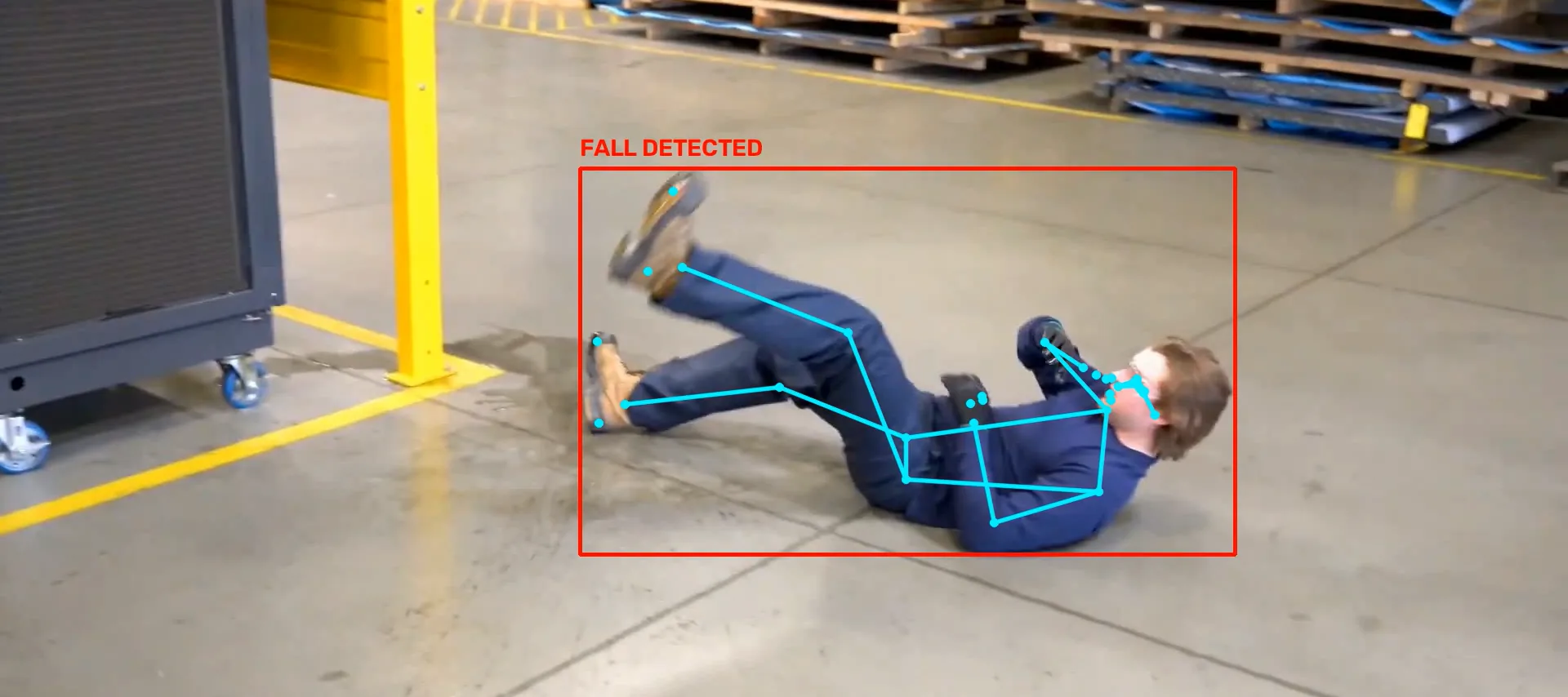
Potential Fall and Incident Detection
Because factory environments contain legitimate kneeling (e.g. equipment maintenance), YAFE models differentiate intentional low postures from abrupt involuntary falls. Verified distress gestures, such as waving both arms above the head, can also manually trigger an immediate high-priority SOS alarm.
From Detection to Rapid Response
When a potential fall event occurs, the system initiates a structured escalation tree:
- Sub-second push alert to central control room monitor with live camera pop-up.
- SMS and automated voice call to designated on-shift first aiders and plant nurse.
- Plant PA broadcast of exact GPS/bay coordinate for immediate ground dispatch, coordinating with our emergency safe assembly head counter to verify total plant headcounts.
Deploying automated AI fall detection slashes lone worker rescue response times from an average of 45 minutes down to less than 90 seconds, dramatically minimizing injury severity.
Conclusion
Lone Worker Safety Detection provides peace of mind for employees operating in high-risk, low-density factory zones. By combining existing CCTV cameras with intelligent computer vision across the Plant Safety AI Suite, complementing PPE compliance detection and restricted zone safety fences, enterprise leaders ensure no worker is ever left unprotected.
← Back to All YAFE Technical Insights