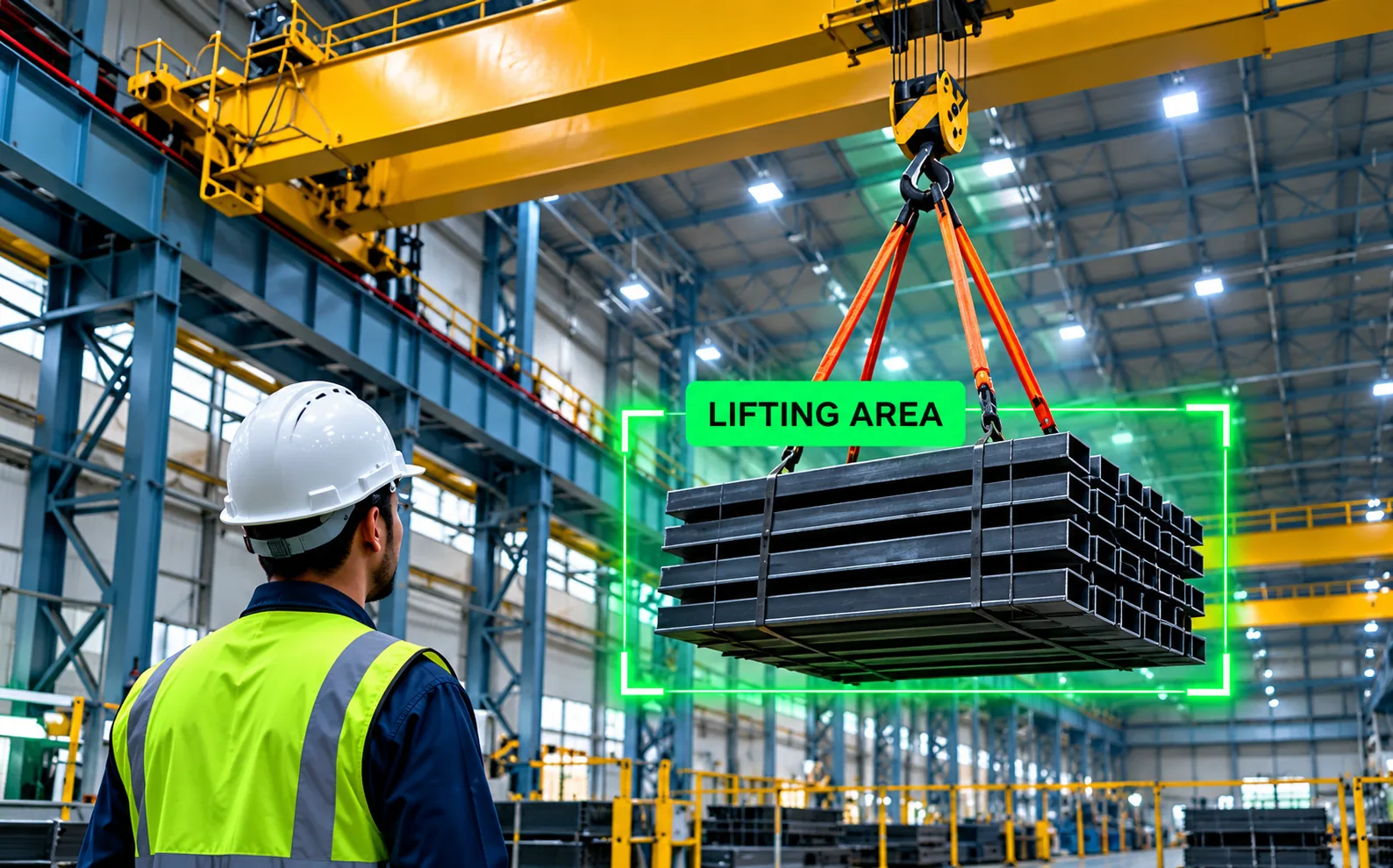
YAFE AI Suspended Load Monitoring uses computer vision to monitor areas beneath and around overhead lifting operations. It can help identify people entering defined danger zones around suspended loads and provide alerts to support safer crane and material-handling operations.
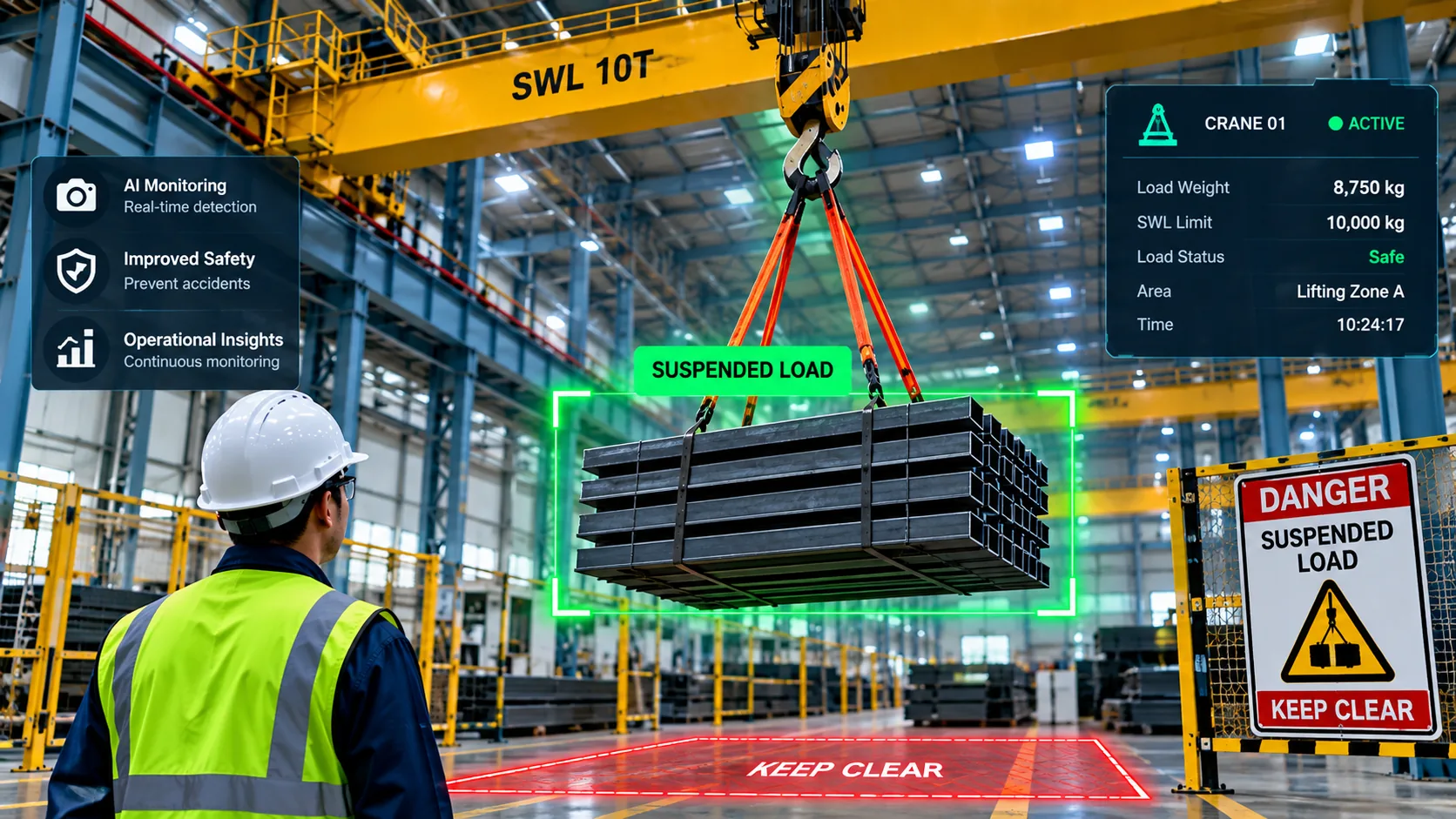
Overhead cranes, gantries, and jib hoists transport multi-ton steel coils, engine blocks, and ladles across open shop floors. Functioning as an advanced crane collision avoidance system, YAFE identifies rigging swing, structural interference, and pedestrian drop-zone intrusions in sub-15ms latency.
Real-time computer vision tracking hoists, hooks, and pedestrians simultaneously.
Overhead CCTV cameras capture wide-angle downward perspectives of the crane bay. Learn how our edge video analytics pipeline processes camera streams.
Models detect crane hooks, wire rope rigging, and suspended materials in real time.
Algorithms project floor-level drop shadow boundaries dynamically as the crane traverses.
Triggers floor warning strobes and operator cab displays when personnel breach the drop zone.
Engineered for high-tonnage industrial environments where mechanical failures are catastrophic.
Protecting workers around overhead ladle cranes carrying molten iron, scrap buckets, and billet tongs.
Monitoring large structural beam lifts, pressure vessel assemblies, and dual-hoist tandem operations.
Safeguarding die-changeover operations where overhead bridge cranes position 40-ton stamping dies.
Securing open lifting corridors around gantry cranes handling pre-fabricated ship blocks and containers.
Comprehensive crane management software combining optical sensors and computer vision for plant-wide lifting safety.
Advanced collision avoidance systems for cranes integrate optical crane collision avoidance sensors to prevent bay-to-bay impacts and structural strikes.
Continuous hoist condition monitoring and hoist safety monitoring track cable sway angles, hook velocity, and mechanical load cycles in real time.
Automated crane inspection software digitizes daily lifting equipment audits, rigging verifications, and compliance checklists. Explore our Smart Factory Solutions and digital standard operating procedures.
Intelligent crane management software with crane & hoist automation synchs overhead movements with ground personnel exclusion zones.
Learn how YAFE uses AI-powered video analytics to monitor suspended loads, crane operating areas, and pedestrian drop zones in industrial environments.
Suspended load monitoring uses AI-powered video analytics to monitor overhead lifting operations, identify suspended loads and crane activity, and detect people entering configured areas beneath or around lifting operations. YAFE helps safety teams monitor pedestrian risks around overhead crane and hoist activities.
YAFE uses computer vision to identify people, crane hooks, rigging pathways, and suspended-load activity from compatible camera feeds. Configured safety zones can then be used to detect when a person enters an area beneath or near a suspended load and generate a safety event.
YAFE can use AI-based camera analytics to define configured safety boundaries around crane and suspended-load operating areas. These boundaries can be used to monitor pedestrian access and identify potential drop-zone intrusions during lifting operations.
YAFE is designed to work with compatible CCTV camera streams, including supported IP camera configurations. Existing ceiling-mounted cameras can be used where their position, coverage, resolution, and video stream are suitable for the deployed AI monitoring system.
Yes. When configured detection conditions are met, YAFE can generate safety events for pedestrian entry into monitored suspended-load or crane exclusion zones. Depending on the deployment and supported integrations, these events can be connected to audible, visual, or other safety alert workflows.
AI suspended load monitoring can be used in industrial environments where overhead lifting operations are performed, including steel and foundry operations, heavy fabrication facilities, automotive manufacturing, shipyards, ports, and other crane-enabled workplaces.