Introduction
Factory safety depends on more than written procedures, periodic safety training, and scheduled walk-through inspections. Manufacturing environments are dynamic. Workers move between production areas, forklifts travel through shared spaces, equipment operating conditions change, and temporary hazards can appear within minutes.
Traditional safety programs remain essential, but monitoring activities still depend largely on human observation. Implementing an on-premises edge video analytics architecture adds an automated visibility layer by converting passive CCTV cameras into sources of continuous, real-time safety intelligence.
AI video analytics does not replace safety personnel. It helps teams transition from intermittent observation toward 24/7 awareness, sub-second response, and a data-backed understanding of recurring risk patterns.
Why Continuous Safety Monitoring Matters
A conventional safety audit provides an isolated snapshot. An inspector may review an area at 10:00 AM and observe full compliance, yet an unsafe condition may develop thirty minutes later. Video analytics extends visibility across every minute of every shift by evaluating predefined safety rules continuously.
- Continuous observation across all defined camera zones simultaneously.
- Automated identification of high-priority safety exceptions.
- Sub-second notification dispatched when critical rules are breached.
- Audit-ready video evidence logs to support root-cause investigations.
- Telemetry heatmaps that reveal systemic physical hazards over time.
AI-Powered PPE Compliance
AI-powered PPE compliance monitoring is one of the most immediate applications of computer vision. Models analyze video streams to verify hardhats, high-visibility vests, safety goggles, gloves, and protective boots. Automated alerts allow EHS managers to address non-compliance immediately, reinforcing a proactive safety culture across the workforce.
Worker Detection & Movement Awareness
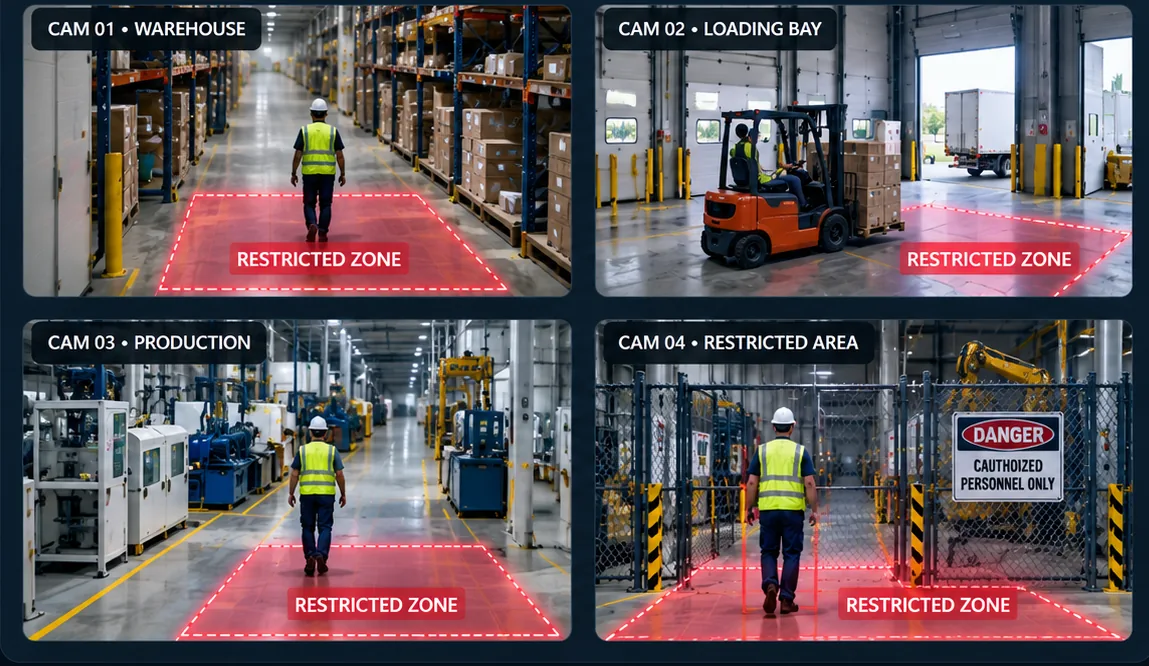
Accurate worker safety detection distinguishes people from moving machinery, pallets, and shadows. By tracking worker trajectories and dwell times, the system flags unauthorized presence in hazardous restricted zones, tracks crowd density during evacuations with muster roll-call head counting and in-out occupancy tracking, and ensures lone workers remain protected against falls.
Forklift Safety & Restricted Zones
In shared warehouse and production corridors, AI establishes virtual danger perimeters around moving forklifts with pedestrian collision avoidance, sounding cabin alarms when pedestrians step within 3 meters. Similarly, virtual safety fences around robotic welding cells or stamping presses communicate directly with machine PLCs to halt machinery if a boundary is crossed.
Building a Closed-Loop AI Safety Workflow
Technology only succeeds when embedded within an operational response workflow. An effective deployment pairs sub-second alert delivery (via beacon lights, SMS, and dashboard pop-ups) with clear supervisory ownership and weekly review of incident trends, driving continuous engineering improvements across the plant.
Conclusion
AI video analytics empowers manufacturing leaders to establish an active, 24/7 safety shield across their facilities. By unlocking actionable insights from existing cameras across the complete Plant Safety AI Suite and reviewing our plant safety AI comparison guide, enterprises safeguard their greatest asset: their people.
← Back to All YAFE Technical Insights