The Rapid Evolution of Industrial Safety AI
Industrial manufacturing and heavy warehousing environments have reached an inflection point. With global compliance standards demanding proactive hazard prevention, Environmental Health and Safety (EHS) executives are looking beyond manual spot-checks toward automated computer vision platforms.
Today, evaluating the best plant safety ai software requires understanding how leading solutions process video streams, protect worker privacy, and trigger physical actions on the factory floor. When searching for the ideal solution among top workplace safety ai companies, enterprise buyers evaluate our Plant Safety AI Suite across core architectural models: on-premises edge computing, cloud-streaming analytics, and hybrid vision gateways.
The primary architectural differentiator in modern safety AI is where video inference takes place. While cloud-dependent platforms require continuous external video streaming and introduce bandwidth and latency penalties, edge-native platforms like YAFE's video analytics edge architecture process video entirely on-premises, delivering sub-15ms hazard response with zero sensitive footage leaving the facility.
Comprehensive AI Safety Software Comparison Matrix
To provide a clear baseline, here is how the primary contenders stack up across core technical and operational criteria in this ai safety software comparison:
Evaluating Cloud-Based Safety AI: Latency & Bandwidth Trade-Offs
Cloud-first platforms played an important role in early computer vision adoption, educating the market on automated PPE detection and ergonomic analytics. However, as modern industrial manufacturing plants scale up deployments to dozens or hundreds of camera streams, engineering teams frequently encounter critical bottlenecks inherent to cloud streaming.
The primary limitation of cloud-centric safety systems stems from continuous video telemetry. Streaming high-definition RTSP streams over corporate internet connections requires substantial ongoing bandwidth, creates potential firewall security reviews, and results in latency of 2 to 3 seconds. In applications like forklift pedestrian collisions or crane suspended-load drop zones, a 3-second delay is too late to prevent impact.
Why Enterprises Choose Edge-Native Architecture: YAFE processes all video streams on local GPU servers inside your plant's air-gapped or internal network. Zero frames leave your firewall, compliance with strict data protection guidelines is guaranteed by design, and inference speeds of 14 milliseconds enable instant siren, beacon, and PLC interlock tripping.
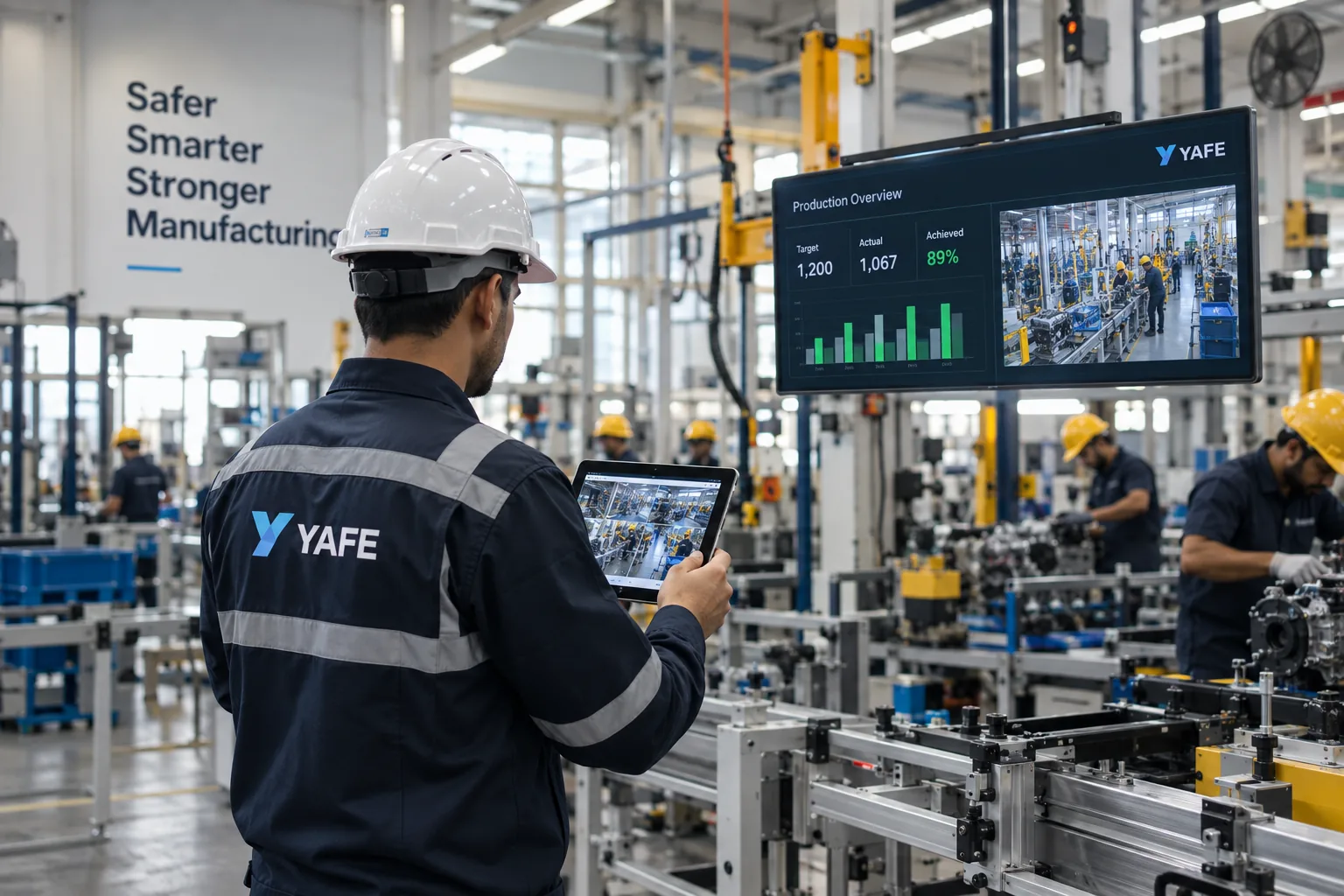
Dashboard-Only Vision vs Closed-Loop MES Operational Control
When plant managers evaluate safety AI, the architectural debate frequently centers on passive reporting versus active operational execution: does the software simply show charts on a web dashboard, or does it trigger automated physical safety interventions on the factory floor?
While dashboard-focused solutions deliver visual charts and incident tagging, industrial manufacturing plants require more than passive reporting—they need closed-loop operational execution. YAFE integrates safety events directly into production execution systems (MES), correlating safety incidents with machine line speeds, shift handovers, and operator quality metrics.
- Hardware Agility: YAFE deploys directly on standard commercial-off-the-shelf (COTS) edge servers or virtualized Kubernetes clusters, avoiding proprietary hardware lock-in.
- Factory-Grade Detection Models: YAFE models are specifically trained on harsh industrial environments—detecting dark oil-stained PPE, heavy casting dust, welding flash glare, and multi-crane rigging bays.
- Closed-Loop Interlocks: While passive vision software focuses primarily on post-shift EHS reporting and worker coaching, YAFE provides physical I/O relay triggers that can halt stamping presses or sound forklift beacons in under 400ms.
Industrial Plant Safety vs Outdoor Construction Vision Systems
A key distinction in industrial computer vision is the operating environment: outdoor construction sites versus indoor discrete manufacturing facilities. While outdoor construction monitoring typically relies on temporary solar trailers and mobile 4G towers, indoor factories need systems optimized for heavy ambient noise, fast-moving forklifts, overhead suspended cranes, and automated assembly cells.
YAFE was built from day one for automotive assembly, tyre manufacturing, heavy metallurgy, and chemical processing facilities. Instead of managing temporary solar trailers, YAFE taps directly into your factory's existing NVR matrix and fixed ceiling IP cameras via RTSP/ONVIF in less than 60 minutes.
Unified Plant Safety AI vs Single-Hazard Point Solutions
In industrial logistics, single-hazard point solutions often focus exclusively on forklift speeding, telematics, or basic ergonomic posture. However, enterprise supply chain and operations directors typically require a unified platform that solves vehicle hazards, plant floor perimeter risks, and emergency muster requirements simultaneously.
YAFE delivers the full spectrum of industrial safety and manufacturing intelligence under one pane of glass:
- Dynamic Forklift Blind Spot Safety: 360-degree vision tracking that distinguishes moving pedestrians from static pallets with zero wearable tags required.
- Suspended Load & Crane Safety: Real-time hook tracking and dynamic drop-zone exclusion zones to prevent crushing hazards.
- Virtual Machine Fencing: Multi-polygon intrusion zones around robotic cells and hazardous machinery.
- Automated Muster Station Roll-Call: Real-time evacuation headcounts at emergency assembly points using existing perimeter cameras, synchronizing with in-out occupancy tracking.
- PPE Compliance Monitoring: Sub-15ms multi-class verification of hard hats, high-vis vests, goggles, and gloves.
Replacing hundreds of industrial cameras costs tens of thousands of dollars and causes weeks of production downtime. YAFE's software-first architecture integrates seamlessly with your current RTSP IP cameras, DVRs, and NVRs with zero downtime.
How to Choose the Best Plant Safety AI Software
When selecting among the top workplace safety ai companies, ask your prospective vendor these five decisive questions:
- Does raw video footage ever leave my factory premises? (If yes, verify data privacy compliance, cybersecurity overhead, and WAN bandwidth limits).
- What is your true end-to-end detection latency? (Sub-second latency is required for moving vehicles and pinch points; cloud roundtrips cannot guarantee this).
- Do your detection models function in high-dust, low-light, or glare-heavy environments?
- Can the system integrate directly into our MES, PLCs, and audible floor horns?
- Can we pilot the platform on existing cameras in under two weeks without purchasing new hardware?
Conclusion: Why YAFE Leads Modern Plant Safety AI
While generic platforms rely on external cloud pipelines or expensive hardware overhauls, YAFE delivers pure enterprise performance: edge-native, sub-15ms latency, 100% on-premises privacy, and seamless integration with existing plant CCTV infrastructure.
Whether you are evaluating edge vs cloud architectures, comparing closed-loop industrial interlocks, or deploying enterprise computer vision at scale, YAFE provides the proactive safety shield modern manufacturing demands.
Schedule a Live Technical Demo →